Hot water is one of the most frequently used services in a home or small property, yet it is often specified late in the project. An integrated heat pump water heater provides a more coordinated approach: the heat-pump system and water tank are built into one vertical unit, helping project teams plan hot-water storage, heating and installation requirements together.
For distributors, installers, developers and homeowners, the goal is not simply to replace a conventional water heater. It is to select a domestic hot-water system that fits the building, supports the expected usage pattern and can be installed with a clear plan for air, water, power and drainage.
This integrated air-source solution is designed for residential and light-commercial applications where dependable stored hot water and a compact equipment layout matter.
Request a Project Consultation
Share your location, building type, number of users, available installation space and expected hot-water demand. Our technical team can help review the suitable tank capacity and site-preparation requirements.
An all-in-one heat pump water heater transfers heat from ambient air to the water stored in its tank. Unlike a system that relies only on electric resistance heating, a heat pump uses a refrigeration circuit and heat exchanger to move heat into the water. Integrating these components into a factory-built appliance makes the hot-water system easier to define at the planning stage.
This approach is especially relevant for new homes, apartments, villas, small accommodation properties and refurbishment projects. Rather than coordinating a separate tank and heat-pump assembly, the project team can work from a single equipment footprint and a clearly defined set of installation requirements.
The practical benefit is not a one-size-fits-all promise. Every site still needs to be assessed for demand, climate, ventilation, drainage, electrical supply and service access. But an integrated design gives that assessment a clearer starting point.
Water-heater selection should begin with the demand pattern, not with a catalogue choice. Two homes with the same number of occupants can have very different needs: one may have short, staggered showers throughout the day, while another may have several high-flow showers in the same morning period.
This product platform is available with 200 L, 270 L and 300 L nominal tank capacities. The appropriate selection depends on the number of users, fixtures, bathing habits, incoming-water temperature, target hot-water temperature and the timing of peak demand. For a seasonal villa or a small guest property, expected occupancy and turnover patterns should be included in the calculation as well.
A properly sized tank helps the system support the intended routine. A larger tank is not automatically the better choice, and a smaller tank is not automatically more efficient. The useful choice is the one matched to measured or carefully estimated project demand.
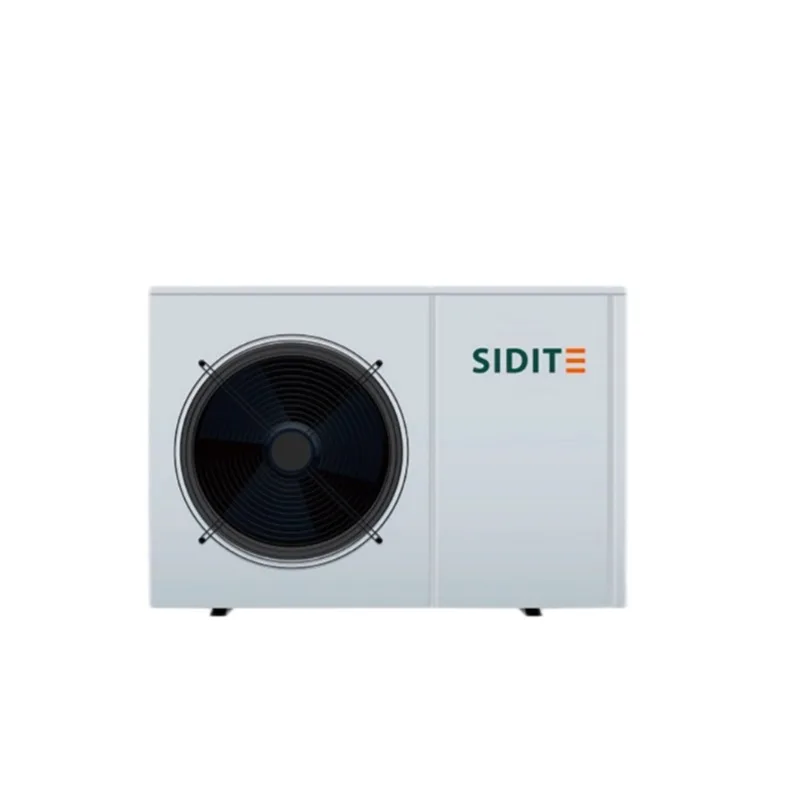
The unit combines heat-pump water heating and hot-water storage in a vertical enclosure. Its supplied technical information identifies R290 refrigerant, a microchannel heat exchanger and electronic expansion-valve control. A four-way valve supports the stated defrost function, while vertical air discharge and an optional ducting connection allow the installer to consider how air will move through the selected installation space.
The specified operating ambient range is from -15 degrees C to 46 degrees C. This supports initial screening for a wide range of locations, but local conditions still matter. Cold climates, enclosed utility rooms, coastal environments and high-demand applications should be reviewed as individual projects rather than treated as identical installations.
The product information also lists a 1.5 kW backup heater. Depending on the final control strategy and local requirements, this can provide additional heating support during certain demand or operating conditions. The final design should always be checked against the installation documentation and the applicable electrical and plumbing rules for the destination market.
Under the stated test condition of 20 degrees C dry-bulb air, 15 degrees C wet-bulb air and water heating from 15 degrees C to 55 degrees C, the supplied specification lists a rated heating capacity of 1.5 kW, rated input power of 0.35 kW and a COP of 4.25.
These figures are useful for comparing the product under a defined laboratory condition. They are not a guarantee of annual electricity use or utility savings at every site. Actual results depend on ambient temperature, inlet-water temperature, setpoint, demand profile, installation quality, ventilation, standby losses and user habits.
For that reason, a credible project proposal should use local climate and operating assumptions. Buyers should be cautious of fixed energy-savings or payback claims made without a review of the actual building and hot-water load.
An integrated heat pump water heater is easier to plan when site preparation begins before delivery. The selected location must provide enough height, floor space and service clearance for the chosen tank capacity. It also needs appropriate water connections, electrical protection, a condensate-drainage route and a workable air-management plan.
The supplied specification identifies a vertical air discharge, an airflow figure of 350 m3/h and a 150 mm ducting diameter. Where ducting is selected, the installer should evaluate the route, duct resistance, weather protection and effect on room-air balance. Where the appliance operates without ducting, the surrounding area still needs appropriate airflow and a layout that will not disturb occupants.
Noise planning should also be practical rather than theoretical. The specification lists 46 dB(A), but perceived sound at the property depends on the room, nearby surfaces, doors, ductwork, distance to living areas and time of operation. Locating equipment thoughtfully is an important part of a comfortable installation.
A heat-pump water heater is not only a heating appliance; it is also part of the building's water system. Water chemistry, pressure control, tank materials, plumbing design and maintenance all affect long-term operation.
The supplied configuration information identifies stainless-steel and enamel tank materials, along with metal and ABS exterior construction. Before final selection, the project team should identify local water hardness and corrosivity, then confirm the most suitable configuration and any required water-treatment measures.
The installation should include the pressure-relief, expansion and plumbing-safety arrangements required by local regulations. At commissioning, the installer should confirm the temperature settings, drainage route, user controls, inspection access and service contact. These details are what turn a delivered appliance into a maintainable hot-water system.
An integrated heat pump water heater is well suited to projects seeking a compact, self-contained domestic hot-water appliance with meaningful stored-water capacity. It can be a strong choice for new residential construction, where plumbing, power, drainage and ventilation can be coordinated early. It can also be considered for a retrofit when the project has adequate space and a clear plan for connecting or replacing the existing system.
For properties with more complex demand, the solution may be part of a wider hot-water design rather than the whole answer. Multi-unit arrangements, dedicated commercial equipment or a project-specific plant-room system may be more appropriate for larger loads. The right outcome comes from a demand assessment, not from assuming that one equipment format fits every building.
Technical documents are essential to a professional procurement decision. Before purchase, buyers should request the current product specification, installation manual, wiring information, warranty terms and the documentation required for their destination market.
The supplied documentation includes an ECM Mark certificate for an all-in-one type air-source heat pump water heater. It records verification against the listed technical standards and references the Low Voltage and Electromagnetic Compatibility directives. The certificate also states that the verification concerned technical documentation and does not replace an EC Declaration of Conformity. Importers and project owners should therefore confirm the complete compliance package needed for the intended market before installation or sale.
A successful hot-water project begins with the right questions. Tell us where the system will be installed, what type of building it serves, how many people or rooms require hot water, the expected peak-demand period, the available utility space and the local power supply.
Our team can help you review the configuration, tank-capacity range and site-preparation points for your application. This gives your project a clearer basis for installation planning, quotation and procurement.
Request a Project Consultation
It is a domestic hot-water appliance that integrates the heat-pump components and water-storage tank into one unit. The heat pump transfers heat from surrounding air into stored water.
Start with the real hot-water pattern: number of users, shower and fixture flow rates, peak-use timing, inlet-water temperature and target temperature. The available 200 L, 270 L and 300 L capacities should be matched to this assessment rather than selected only by property size.
Indoor installation may be considered when the location provides suitable space, air management, drainage, electrical supply and service access. The installer should evaluate whether ducting is needed and confirm all local installation requirements.
No. The COP in the supplied specification is measured at a stated test condition. Actual energy use is influenced by climate, hot-water demand, inlet-water temperature, setpoints, installation conditions and operating habits.
Provide the project location, building type, number of users or rooms, daily and peak hot-water demand, proposed installation location, electrical supply, water conditions and any relevant drawings. This information supports a more accurate configuration recommendation.

SIDITE Energy provides solar water heaters and heat pump systems for residential and commercial use. Our energy-efficient, low-carbon technologies reduce emissions and save energy. Trusted globally for 19 years. Learn more.
Yuxin Industrial Park, Nanhu Region, Jiaxing, Zhejiang, China
Copyright © 2025 by SIDITE Energy Co., Ltd. Privacy Policy
 EN
EN


 Hot News